Finding Center
Lately, while wearing my Realtor hat, I’ve been touring more traditional homes seen below — not casually traditional, but fully axial, deeply symmetrical interiors. Centered fireplaces. Identical armchairs. Perfectly aligned art. Matching lamps. A clear spine running through the room.
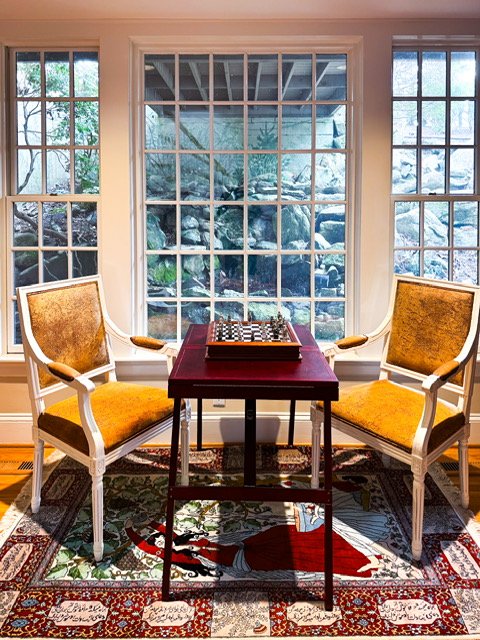
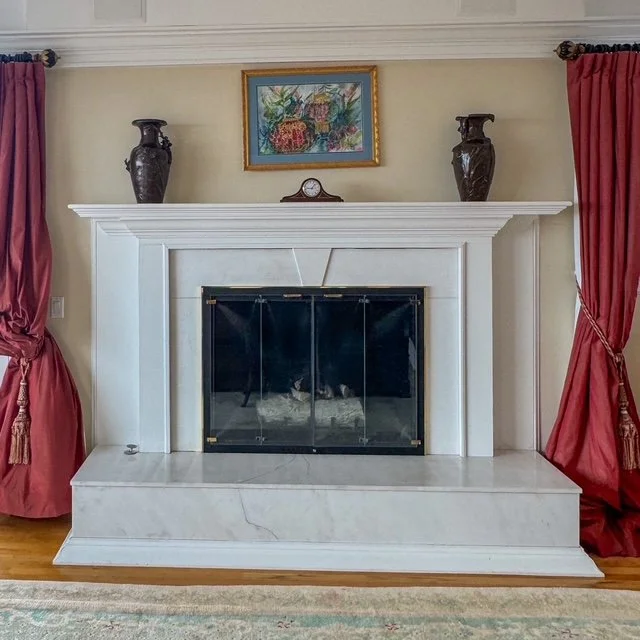
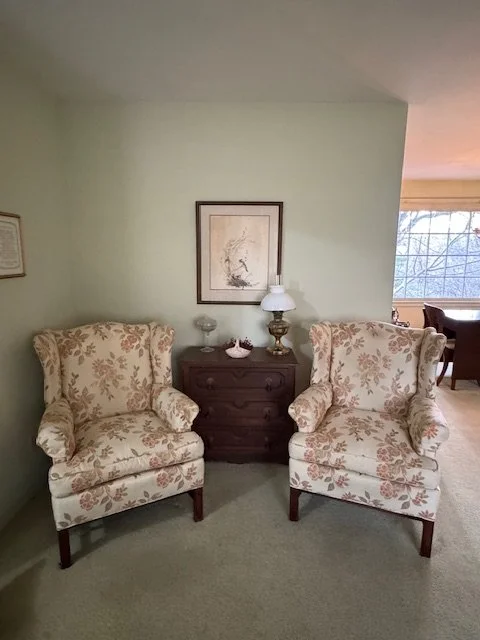
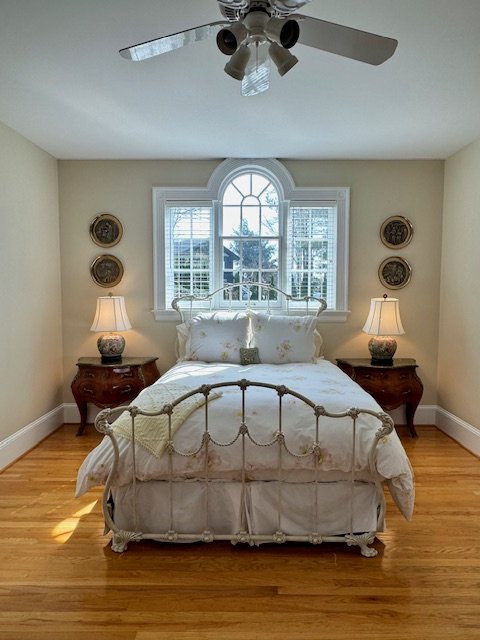
Lately, I’ve been touring more traditional homes — not casually traditional, but fully axial, deeply symmetrical interiors. Centered fireplaces. Identical armchairs. Perfectly aligned art. Matching lamps. A clear spine running through the room.
And I’ve found myself unexpectedly drawn to them. Not intellectually, but physically.
There’s a calm that settles in when you step into a space that is fully centered. Your eye doesn’t search for hierarchy; it’s given one. The architecture establishes the focal point and the furnishings reinforce it. Nothing competes. The room feels resolved.
I’ve been asking myself why this feels grounding right now — and whether I could actually live with that much symmetry.
Because what I’ve always loved about the modern lifestyle, at least the way I live it, is something different. I like composing things slightly off-center — a console shifted just enough, a grouping of three objects instead of two, negative space that allows the eye to travel. I’m drawn to the tension and release, the quiet relationship between object and void. Space that allows movement. The room breathes differently.
In the past, symmetry felt almost too composed.
Part of that is aesthetic, but part of it is cultural. I’ve always associated traditional symmetry with a kind of formality — rooms that feel set, arranged, almost ceremonial. The kind of spaces where furniture seems to hold its position rather than shift with daily life.
My instinct has always leaned more relaxed than that. Sofas angled toward conversation rather than locked into alignment. Objects gathered over time instead of placed in perfect pairs. Rooms that feel lived in, a little improvised, able to stretch and change.
For years I assumed that looseness was the opposite of traditional symmetry. But walking through these houses lately, I’m starting to wonder if that’s not entirely true.
In Asheville, that aesthetic has always made sense. Creativity here leans expressive, individual, slightly untethered. But we are living in an off-axis moment — economic uncertainty, digital overstimulation, collective disruption, even here at home.
Life already feels off center.
And symmetry does something different to the nervous system.
When I was in architecture school, I read Christopher Alexander, particularly The Timeless Way of Building. At the time, his writing about “strong centers” and wholeness felt philosophical, almost abstract. Standing in these traditional rooms, I understand it differently now.
Alexander argued that spaces feel alive when they possess strong centers — when elements reinforce one another and create coherence. A room needs gravity. It needs relationships that make sense. Symmetry is one of the oldest ways we create that coherence.
Traditional interiors use mirroring and proportion not merely as decoration, but as structure. They establish an axis — a visual and emotional anchor. When chairs flank a fireplace, sconces reflect one another, and a dining table sits squarely beneath a centered fixture, the message is quiet but unmistakable: there is order here. There is intention. There is stability.
Symmetry reduces visual noise and contains energy rather than scattering it. In a chaotic world, that containment can feel like care.
And yet total symmetry can feel rigid — almost ceremonial. That’s where I pause. I’m not drawn to rooms that are entirely mirrored. I’m drawn to anchored spaces.
A living room grounded by a centered hearth but layered with asymmetrical styling. A bedroom balanced by nightstands, softened by art that isn’t perfectly aligned. A dining room that holds its axis while allowing movement around it.
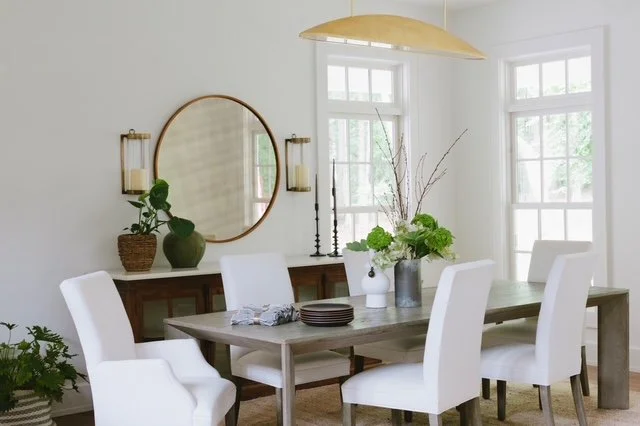
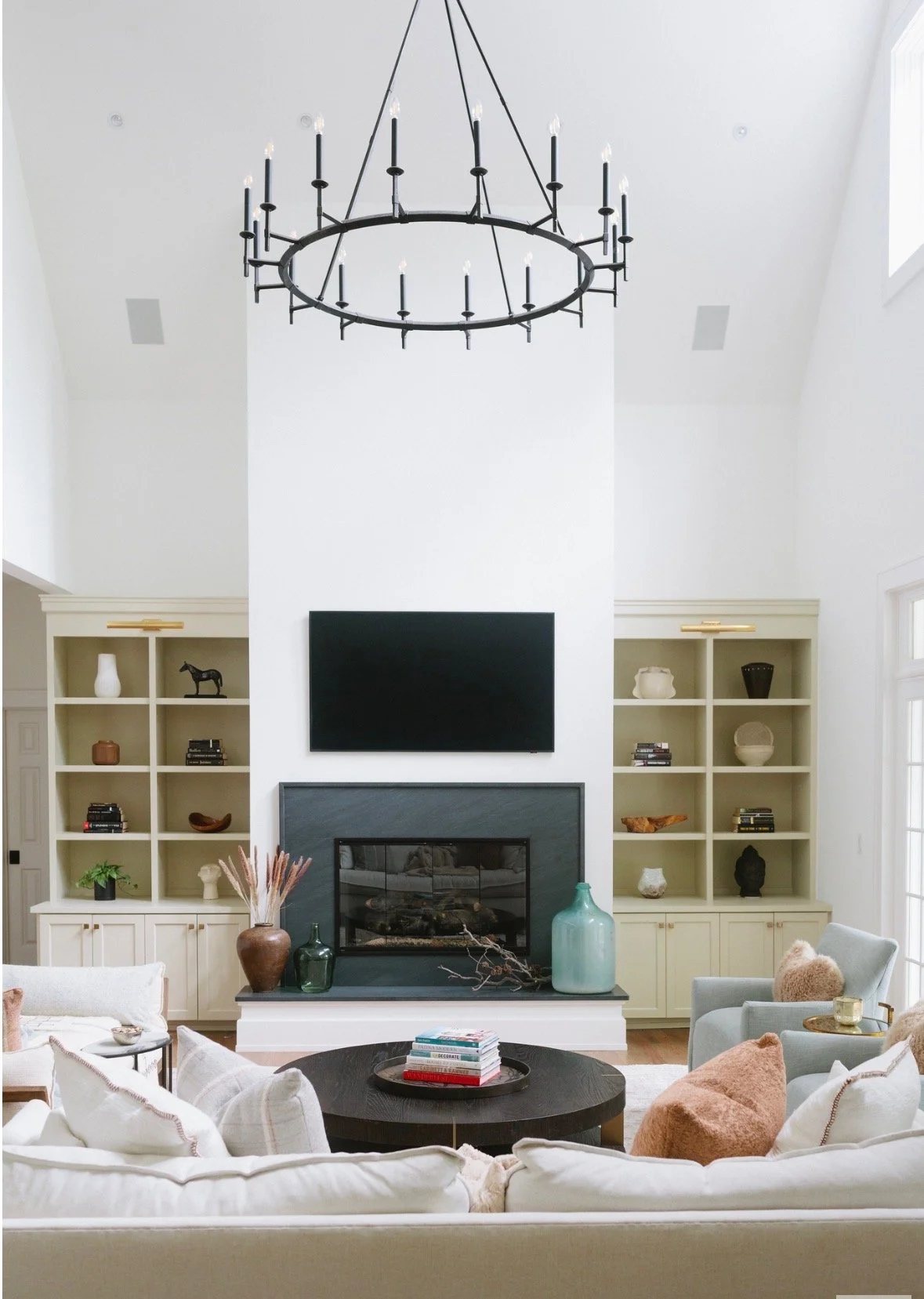
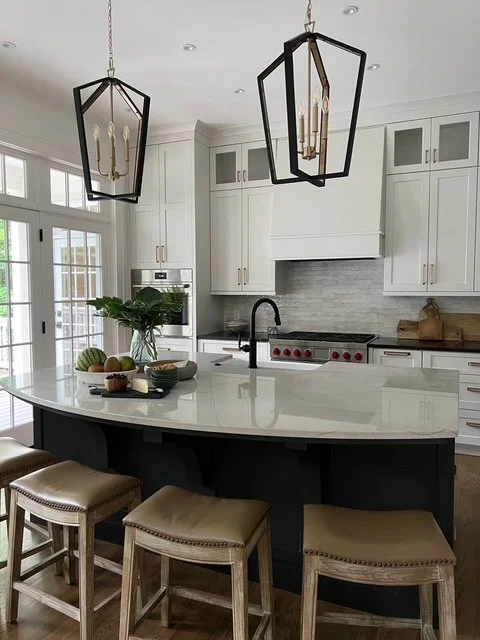
Local interior designer — and my friend — Susan Chancey describes symmetry this way:
“Traditional interiors have long favored it because it creates an immediate sense of harmony and order. From Palladian villas to Colonial homes, balanced compositions help spaces feel timeless and grounded. But the trick is that perfect symmetry often hides subtle asymmetry.
A tall cabinet might be balanced with open shelving, or a large artwork offset by two smaller pieces. The eye still reads the room as balanced because what matters isn’t strict duplication but visual weight. Our brains naturally look for patterns, and symmetrical spaces are easy to read — that ease is what creates the calm and clarity we feel within them.”
For me, symmetry doesn’t need to dominate a room. Maybe it simply needs to anchor it.
As a space moves outward — toward windows, toward art, toward the natural world — it can loosen. Styling shifts slightly off-center. Negative space opens up. The center holds, and the edges breathe, much like drishti in yoga.
In nature, perfect symmetry is rare. But strong centers are everywhere — a tree trunk before its branches, a spine before limbs extend, a hearth before a home unfolds around it.
Maybe that’s what I’m responding to in these traditional interiors.
Grounding.
In an off-axis world, we don’t necessarily need perfect symmetry.
We need an anchor.
And from that anchor, we can allow flow.