Embracing the Shadows
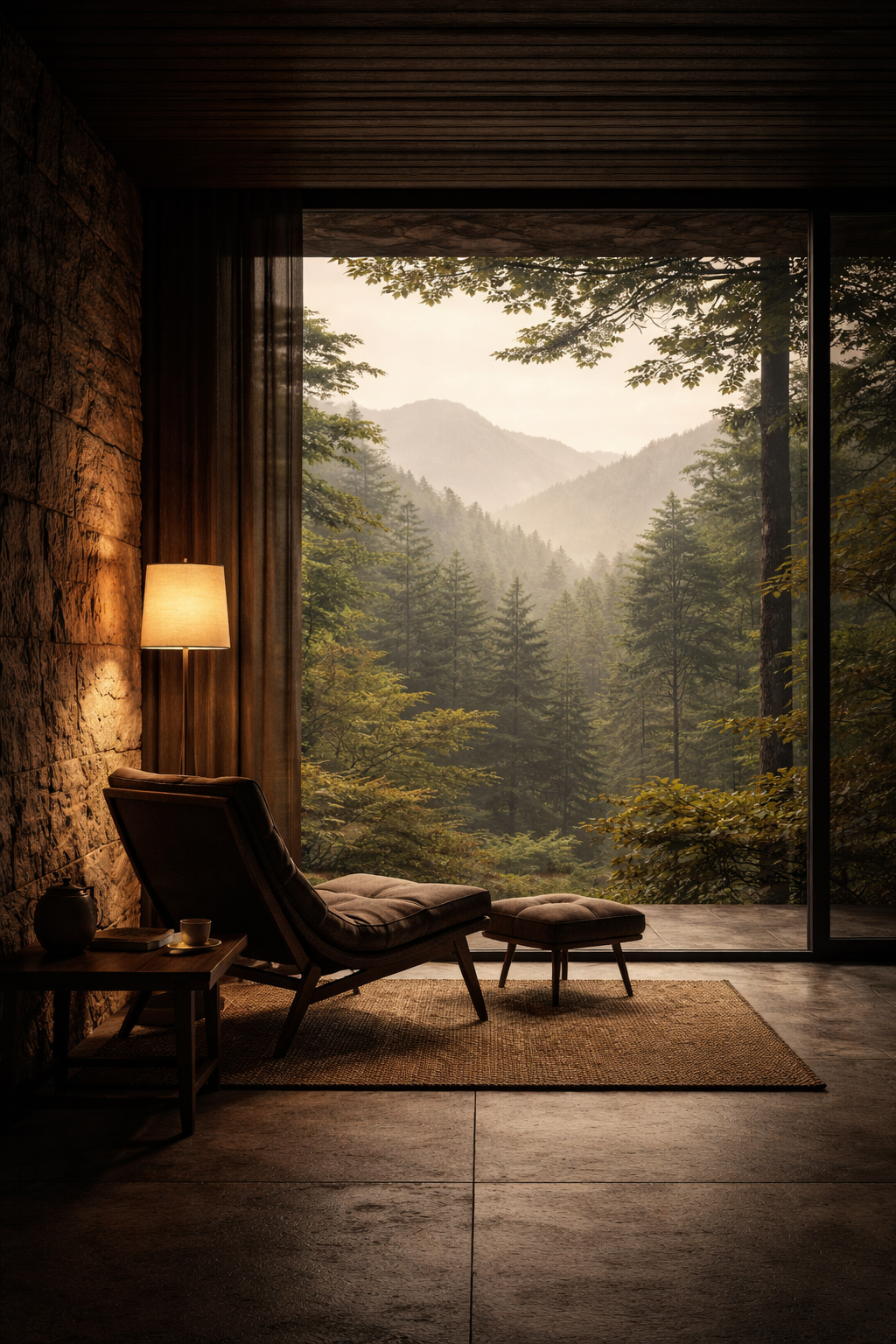
There’s this thing in real estate… we’re always chasing light.
Bright. Open. Light-filled. We love to sell that when it is true.
That matters. I get it.
Also, the more I walk through homes, the more I notice—it’s not always the brightest ones that feel the best.
It’s usually the ones with a little contrast. The ones that don’t show you everything right away.
I read an essay a while back—In Praise of Shadows—and it really stuck with me.
Tanizaki talked about a different kind of beauty. Not the obvious brilliance, but the subtle stuff. Shadows, texture, the way light kind of fades before it fully arrives. Once you start seeing that… you can’t really unsee it.
Because light on its own? It can feel flat.
It needs something to hit. Wood grain. Plaster. A darker corner. Even… shadow.
There’s a thought from Louis Kahn that architecture isn’t just about bringing light in… it’s about shaping it. And part of that shaping? Knowing where light doesn’t go. I. M. Pei said something similar—light and shadow work together. One gives meaning to the other. You can see it in some of his townhome designs in Philadelphia. And honestly… that feels true in every home I walk into.
I didn’t really notice it until I started seeing it in my own space.
My place is an older 1950s cottage—wood interior, tucked in a little. It’s not what most people would call bright. But the light that comes in… it moves. Slow in the morning, drifts across the floors, and by evening the whole house just… settles.
There are corners that stay dim most of the day. And instead of feeling like something’s missing, those are the spots I end up going. The places where I can just… pause. Slow down. Be.
I remember living in a passive solar house in Alexander, too. The south side flooded with sunlight, heating the floors—it could feel intense. Almost oppressive sometimes. But the screened porch to the north offered soft shadows. A place to escape the brightness.
It reminded me of how Frank Lloyd Wright used contraction and expansion in his homes—spaces that pull you in, then open up, letting light and shadow orchestrate the experience, telling you when to pause… and when to move.
And it clicked for me: homes aren’t just about light or shadow. They’re about balance. Where you go to be awake… and where you go to simply settle.
We assume a home should be bright everywhere. But that’s not really how we live. We’re not “on” all the time. We need places to pull back a little.
The homes that really feel right? They get this instinctively. They let light arrive, move, and leave. They hold shadows where you need calm. They have corners that breathe.
So now, when I walk into a house, I’m not just looking for light. I’m paying attention to where it fades, where it softens, where the house kind of… exhales.
Because in the end… it’s not the brightest homes that stick with you.
It’s the ones that understand shadow.