
October brought another month of adjustment to the Buncombe County housing market. Closed sales declined nearly 19% compared with October 2025, while new contracts fell approximately 8%. Inventory remains higher than a year ago, and homes continue to spend more time on the market.
Yet the broader picture is more nuanced. Through the first ten months of 2026, both contracts and closed sales remain ahead of last year’s pace, although that lead has narrowed over the past two months. October’s median sales price was approximately $491,000, compared with $450,000 a year ago. For the year as a whole, however, the median price is up only about 1%, suggesting considerably more stability than the October comparison alone might imply.
A few October numbers worth considering:
282 homes closed, compared with 347 a year earlier.
300 contracts were written, compared with 327 last October.
Average days on market reached approximately 72, continuing a gradual increase over the past 18 months.
46% of closed sales included seller concessions, reflecting the growing role of negotiated expenses in completing transactions.
Homes selling between $450,000 and $600,000 averaged 94% of their original asking prices, while properties above $1 million averaged approximately 86%.
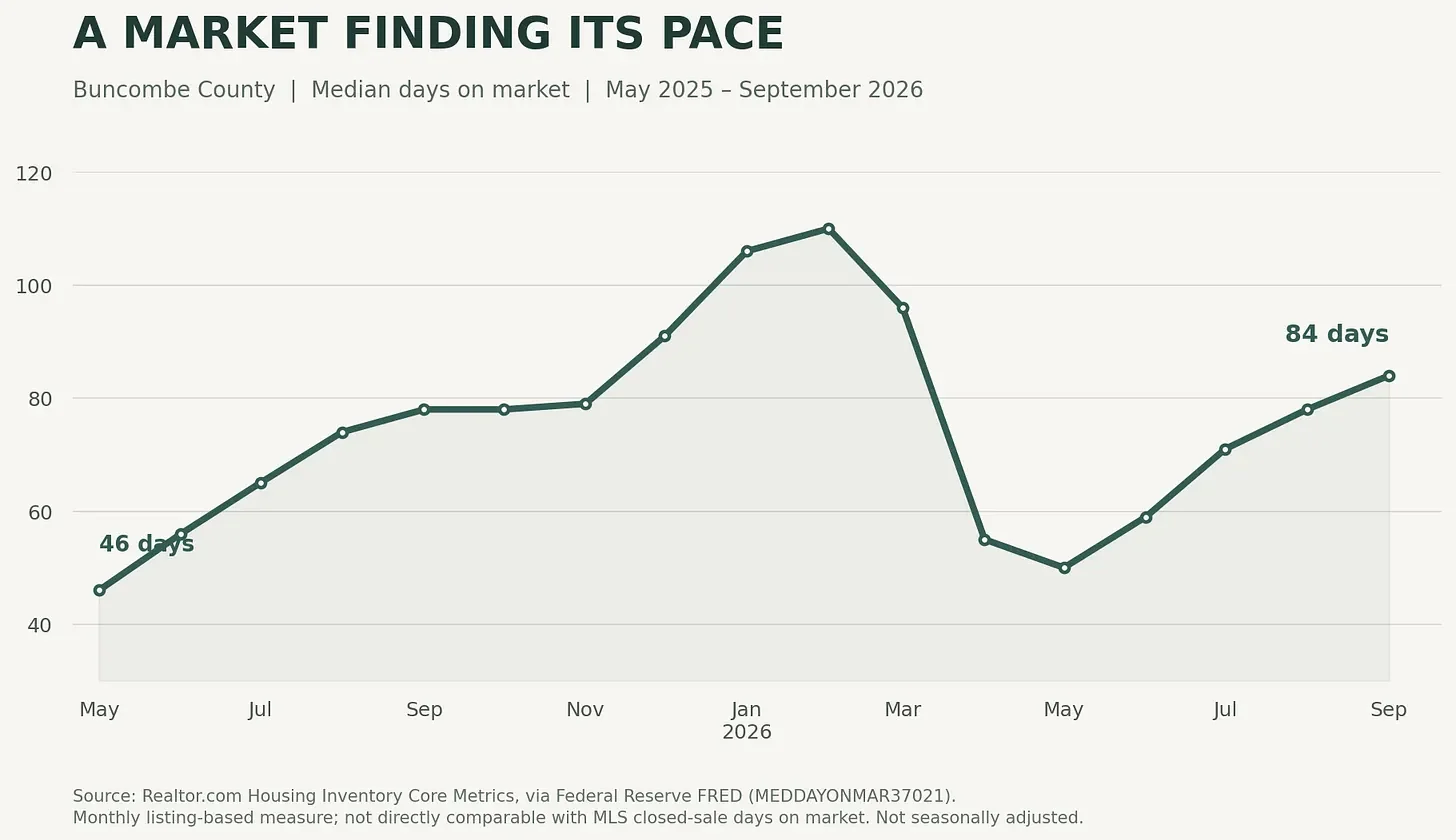
October’s slowdown also deserves some context. With the November election approaching and mortgage rates rising in recent weeks, some buyers may have chosen to postpone decisions. It’s difficult to know how much these factors contributed to the decline, but they’re worth considering before interpreting one month’s activity as a longer-term trend.
Interestingly, the luxury market has shown greater resilience. While overall sales declined, transactions above $1 million actually increased compared with last October, from 29 to 33 sales. More than half of those purchases were made with cash. I suspect mortgage rates are playing a role in this difference. Buyers at lower price points are often more sensitive to monthly payments, while cash buyers at the upper end are less directly affected by borrowing costs. It’s another reminder that we’re not experiencing one uniform housing market, but several markets moving at different speeds.
A Little Perspective
I’ve been thinking about how much our expectations of the housing market have changed in just a few years. During the extraordinary period following the pandemic, we became accustomed to homes selling almost immediately, often with multiple offers and little room for negotiation. That pace became our reference point, even though historically it was anything but normal.
Today, homes are taking longer to sell. Average days on market have increased substantially over the past 18 months, not in one dramatic shift, but gradually, often by just a day or two each month. Those small increases have accumulated into a meaningful change.
There was a time when discussing a 90-day marketing period was perfectly ordinary. Now, 60 or 70 days can feel like something has gone wrong.
Looking at the monthly fluctuations, I’ve also been thinking about how our traditional selling seasons seem to be shifting. The familiar rhythms of spring, summer, and fall haven’t disappeared, but they may be less predictable than we once expected. We’re adjusting not only to a different pace of selling, but possibly a different calendar as well.
But this isn’t simply a return to the market we knew before the pandemic. Buyers are navigating higher borrowing costs, more choices, and uncertainty about the economy. Sellers, meanwhile, may still be working from expectations formed during a very different period. That distance between expectations and reality may be one of the defining characteristics of our current market.
The October numbers offer some evidence. Nearly half of all closed transactions involved seller concessions, and the difference between original asking prices and eventual selling prices is particularly noticeable in the luxury market. Yet even as luxury sales have increased, more than 300 single-family homes priced above $1 million remain actively listed in Buncombe County, having already spent an average of 156 days on the market. Stronger sales and substantial competition can exist at the same time.
There’s another interesting contrast in the broader market. According to the October single-family housing report, homes that sold without a price reduction spent a median of just 10 days on the market, compared with 118 days for homes that underwent a price reduction. While many factors influence those outcomes, the difference reinforces the importance of pricing and positioning a property for the market we have today.
Of course, every property has its own circumstances. Location, condition, price range, and competition continue to shape the experience. Some homes attract strong interest almost immediately, while others wait months for the right buyer. The overall statistics can describe the direction of the market, but they don’t necessarily describe the market for any individual home.
What we’re witnessing may not be simply a slowing market, but a recalibration of what we consider normal. Homes are still selling, buyers are still buying, and prices have remained relatively stable overall. But time, preparation, realistic pricing, and patience have become increasingly important.
The market hasn’t stopped moving. It’s moving at a different pace, and our expectations need to move with it.